Framed colour prints of London. What is a light streak and how I make one.
A light streak requires a slow shutter speed and the camera needs to be securely mounted on a tripod. It tests every element of your skill as a photographer — from timing and composition to exposure control — and I feel very smug and quietly proud when I’ve been successful with one.
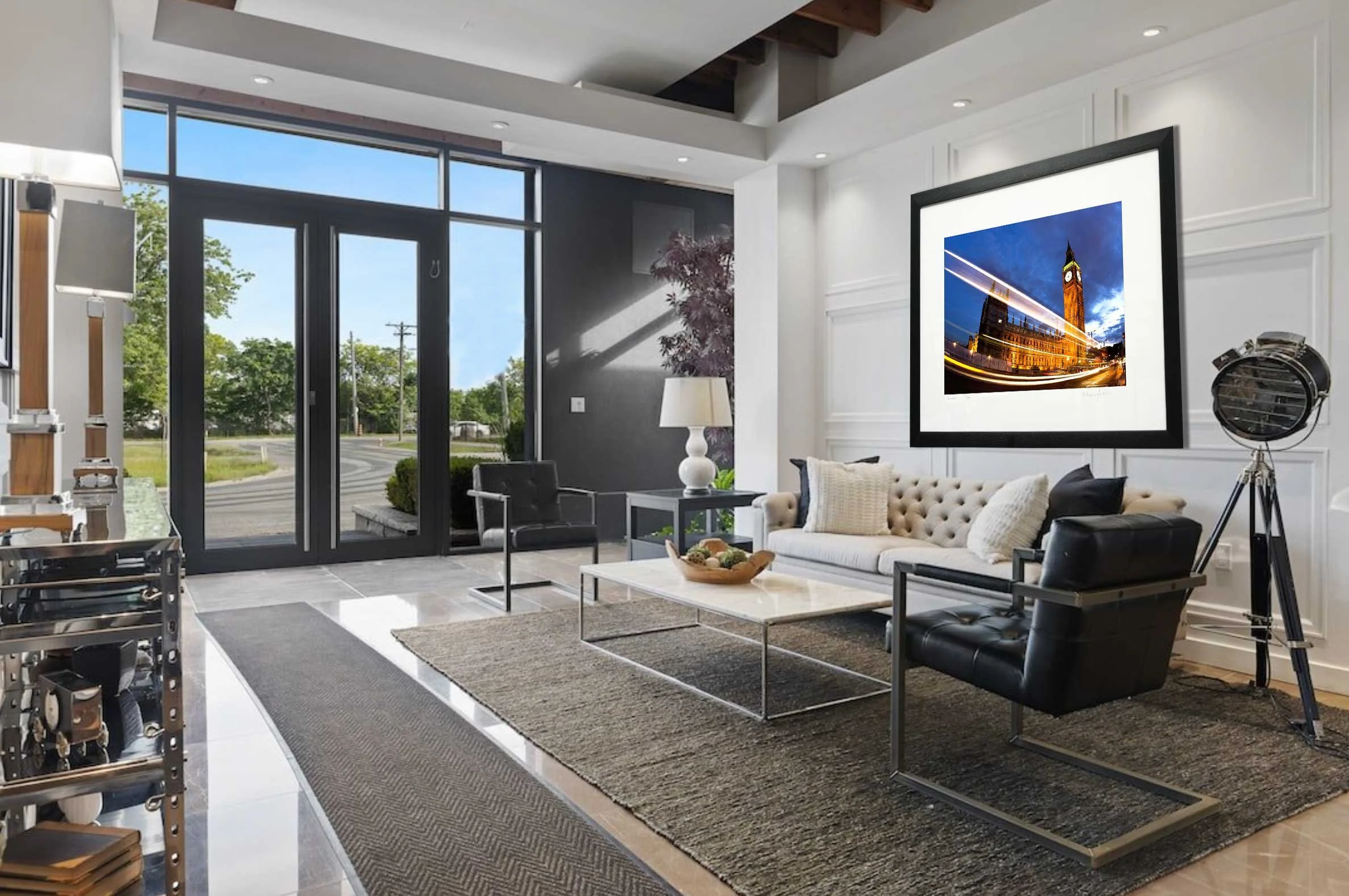
Buses and taxis make the best light streaks. There are coloured lights on a bus that sit higher up, and the yellow “for hire” light on a taxi brings warm colour into the streak. You can see the framed print of this photograph above here.
To make a light streak image it doesn’t need to be completely dark, but it does help if the ambient light is low since the shutter speed will need to be at least a second long. Let the camera work out the corresponding aperture value — if it’s very dark the aperture reading won’t go off the scale.
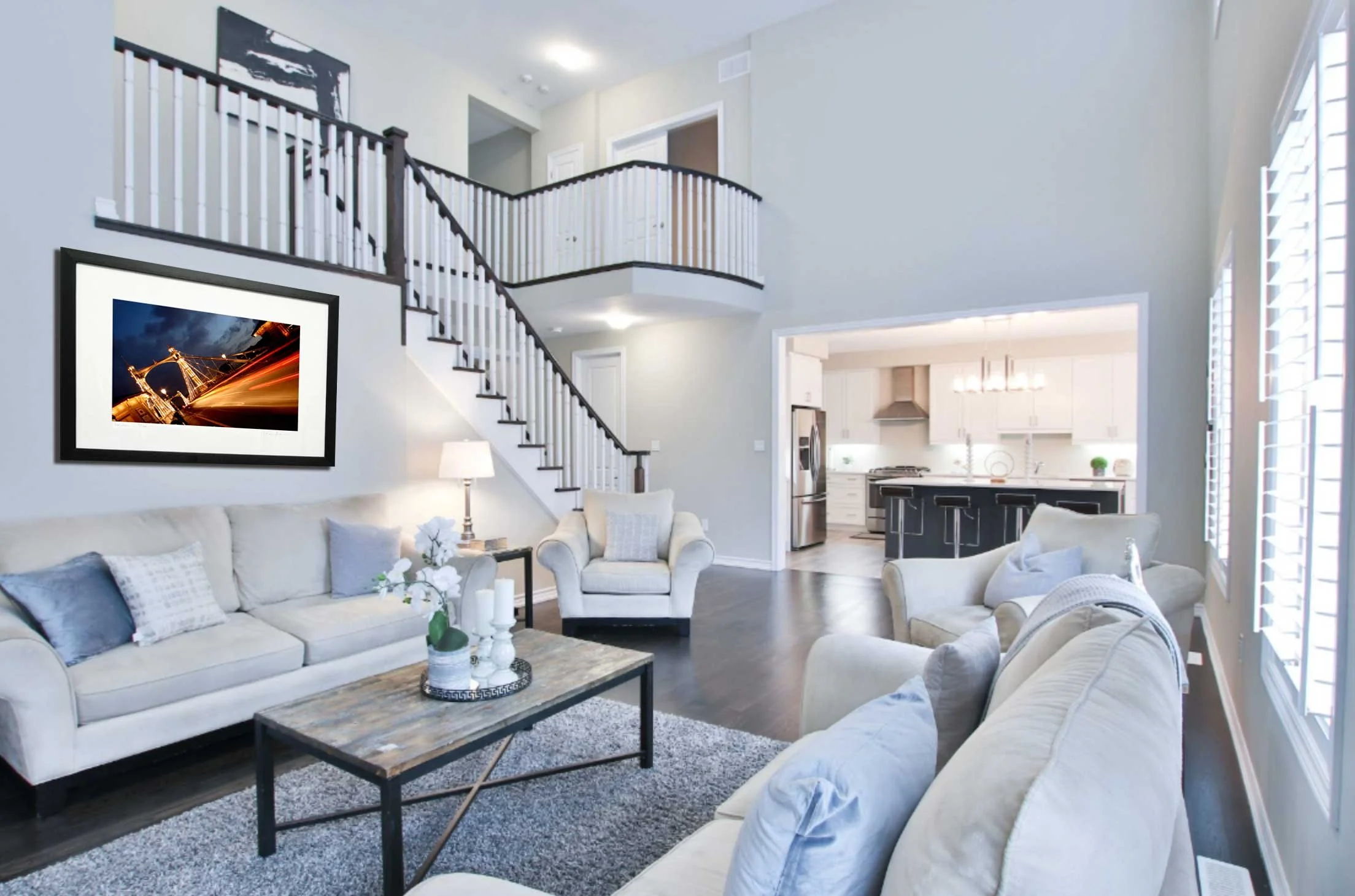
I position myself out of the way of cyclists and pedestrians, then watch for buses and taxis that are running on their own so other traffic doesn’t pollute the light you want in the shot. I keep looking ahead to see what’s coming along the road and begin shooting when the timing feels right. A cable release to fire the shutter is an important piece of kit for this work. You can see the picture of Albert Bridge above here.
I take plenty of exposures and, when I’m happy with what I’ve got, I bring the film back to my studio.
Because I shoot mostly on film it takes much longer to make a final print than it does in a digital workflow, and I’m happy with that — most of my clients appreciate that I’m a bit old school about the craft of printing as well as the art of photography itself.
I hope you enjoy my galleries, and when you come across an image made with a long exposure — especially one with a light streak — I hope you enjoy it all the more.